

This Little Blue Heron was watching over chicks in a nearby nest. He fluffed up his feathers and shook everything out, transforming into a little "regal" heron!

...his change is so rapid, it is almost like he slips on royal clothes.

...slowly morphing back into his "average joe" look.

...what a difference!

...here's another noticeable difference. When Little Blue Herons are chicks, they are white and remain so all through their first year. Hints of what's to come are visible, though--they have a small black tip on their bills, and small bits of darker gray or blue can be found at the tips of their wing feathers (but it's hardly noticeable).
Mother Nature always has a reason for her anomalies, and white morph immature Little Blue Herons are no exception. Turns out Snowy Egrets don't mind when baby Little Blue Herons hang out with them and fish. Maybe because the young birds are white, the Snowy Egrets ignore them, which is good for the young Little Blue Herons. For some reason, immature Little Blue Herons who hunt with Snowy Egrets catch more food! I found no definitive answer, but the most common reasoning was the Snowy Egrets hunt differently than Little Blue Herons and stir up more fish, making it easier for the Little Blues to catch dinner. Since the Little Blue Herons remain white for a year, they get a head start by fishing with Snowy Egrets. Because of that, you'll often find Little Blue Herons and Snow Egrets nesting together in rookeries...

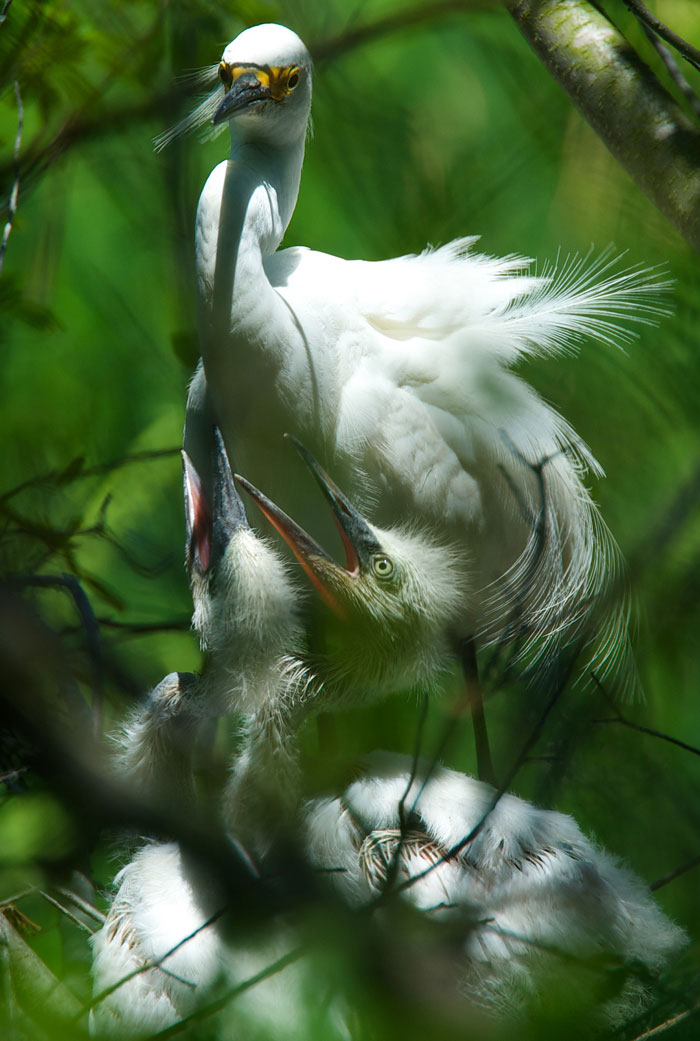
A Snowy Egret nest is tucked into the Little Blue Heron section of the Ibis Pond rookery on Pinckney Island in South Carolina. Every year I've found Little Blues and Snowy Egrets nesting together at the Ibis Pond rookery.
For another post showing a Little Blue Heron in his "regal-ware," click here.
(Photographed on 6/6/2011 at Ibis Pond on Pinckney Island, SC near Hilton Head.)
For more information about immature Little Blue Herons and their white color morph, click here for the Cornell Lab of Ornithology's "All About Birds" site.







 Posts
Posts


